Cool Water vs. Hot Fire: The Science of Ẹbọ
Joan Ayebola
Author
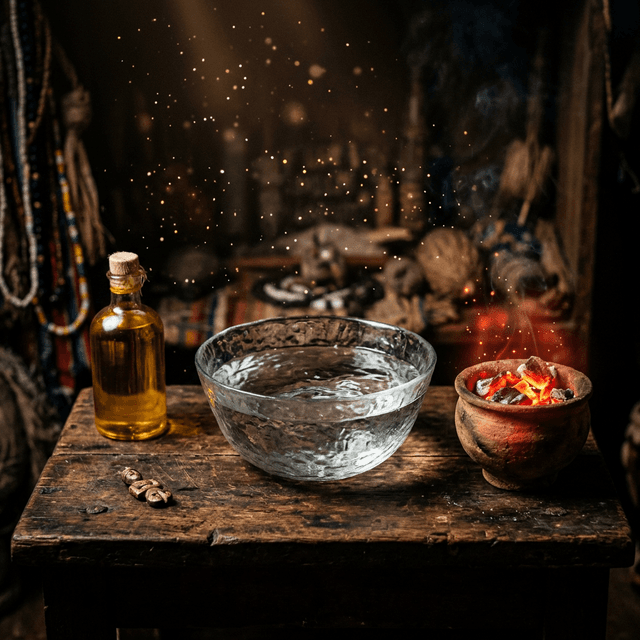
For over a century, the word "sacrifice" has been used as a weapon against Yorùbá culture. Colonial historians framed Ẹbọ as something savage, a primitive attempt to appease "hungry" or "angry" gods with blood. They painted a picture of a "bloodthirsty" tradition to justify replacing it with their own.
But in Yorùbá philosophy, Ẹbọ has nothing to do with bloodlust. It is a sophisticated system of spiritual thermodynamics. It is the science of moving energy from a state of "Hot" (chaos/volatility) to a state of "Cool" (balance/peace).
The Law of Reciprocity
At its core, Ẹbọ is based on a simple, undeniable truth: You cannot take from the Earth without giving something back. We live in a closed system of energy. Every time we breathe, eat, or build a house, we are consuming resources from the universe’s storehouse. In Ìṣẹ̀ṣe, we recognize that this creates a "debt" in the equilibrium of nature. Ẹbọ is the act of paying that debt. It is the ritual of reciprocity that ensures the world remains in balance.
Hot Fire vs. Cool Water
In Ifá, we categorize the world into two primary energies: Iná (Fire/Heat) and Omi (Water/Cool).
- Hot Fire (Iná): This represents a state of volatility. When your life is "hot," you experience constant conflict, sudden obstacles, physical illness, or high-stress anxiety. It is the spiritual equivalent of an engine redlining. If it stays hot for too long, it will explode.
- Cool Water (Etù): This is the state of Ìwàpẹ̀lẹ́ (gentle character). It is clarity, health, and a clear path.
Ẹbọ is the radiator. It is the alchemical tool used to "cool" a situation that has become dangerously hot. When a Babaláwo or Ìyánífá prescribes a sacrifice, they aren't "buying" a favor from an Orìṣà. They are performing a transaction to shift the frequency of your environment from chaos back to equilibrium.
The Physics of the Offering
Why do we use specific items like palm oil, honey, or animals? It isn't random. Each item carries a specific "vibration" or "Aṣẹ."
- Palm Oil (Epo): Used to smooth and "heat" an action into manifestation.
- Honey (Oyin): Used to "sweeten" a bitter situation.
- Cool Water (Omi): Used to stabilize and calm.
When life force is offered, it is the release of Aṣẹ (raw energy) to fuel a change. The Òrìṣà, who are the personified forces of nature like the Ocean, the Wind, and the Iron do not "eat" the food in the way humans do. They absorb the energy of the sacrifice to facilitate the shift in your life. It is a spiritual contract, signed in the physical world.
The Ultimate Sacrifice: Character
There is a common saying in the 256 Odù Ifá: "Ẹbọ fífún kò tó ìwà pẹ̀lẹ́" which means Sacrifice is good, but character is better.
If you offer a thousand goats but your heart is full of malice, your Ẹbọ will fail. Why? Because your internal "heat" (your bad character) will immediately boil away the "coolness" of the ritual. The ultimate Ẹbọ is the sacrifice of the ego. It is the willingness to change your behavior to match the balance you are asking the universe to provide.
Conclusion: Maintaining the Equilibrium
Ẹbọ is an act of humility. It is a reminder that we are not the masters of this planet, but participants in a massive, interconnected web of life. We give so that we may continue to receive. We cool the fire so that we can walk the path in peace.
The next time you hear the word "sacrifice," look past the colonial labels. See it for what it truly is: the science of keeping the world’s heart beating.
Reflect & Connect
Think about a "hot" situation in your life right now, a conflict or a stressor. What would it look like to "cool" that energy through an act of reciprocity or a change in character?